A pioneer in the one-stop destination for each & every human being for all tourism needs of the moment. place of tourism serves as a unique digital forum by incessantly providing essential information on tourism and all the tourist places at utmost goodwill service.
Choose Your Language
Sambalpur Famous for its Sambalpuri Saree, the Sambalpur District is the western part of the state of Odisha. The District is surrounded by Deogarh District in the East, Bargarh District in the West, Jharsuguda District in the North, and Sonepur and Angul Districts in the South.
The economy of Sambalpur District is dependent on agriculture and secondly no forests. Forests play an important role in the economy in terms of contribution to revenue, Domestic Product as well as dependence on people for livelihood. In the past Sambalpur has been a great centre of the diamond trade. Kendu leaf (Diospyros melanoxylon) is also produced in Sambalpur. Tendu leaf is one of the most important non–wood forest products of Sambalpur and is also called as green gold of Odisha. Lately, industrialization has started in the district and the prime industries of power, alumina, and steel have been established. The place is famous for its globally renowned textile-bound patterns and fabrics locally known as Baandha. Sambalpur is famous for its Handloom textile works, popularly known as Sambalpuri Textile. It has earned international fame for its unique pattern, design, and texture. Apart from textiles, Samabalpur has a rich tribal heritage and fabulous forestlands.
The important crops grown in the District are rice, gram, tuar, arhar, seasame, groundnut, mustard, castor, and linseed. Sugarcane is the most important cash crop grown in the District.
TOURIST PLACES OF SAMBALPUR DISTRICT
Sambalpur district is located in the western part of Odisha. Its headquarter Sambalpur has been considered as the gateway to western Odisha. It is also considered as the Cultural Capital of Western Odisha. Tourist places of Sambalpur District :
- Samaleswari temple
- Hirakud Dam
- Gudguda Waterfall
- Huma Temple
- Ghanteswari Temple
- Usakothi (Badram Wildlife Sanctuary
SAMALESWARI TEMPLE (Sambalpur, Odisha) :
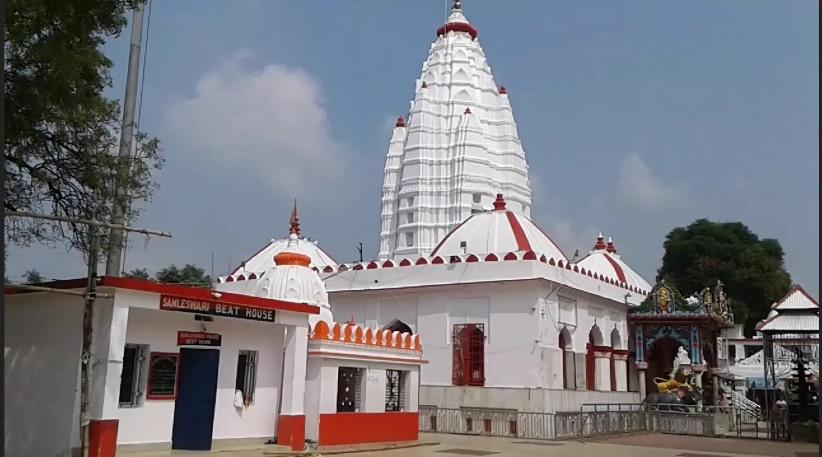
Sambalpur is known for its presiding deity Goddess Samaleswari. The temple of the Goddess was built in 16th century A.D. by Balaram Dev, the 1st Chouhan ruler of the Sambalpur Chouhan dynasty. Even prior to the Chouhan rule Sambalpur has been a pilgrimage center well know far and wide. In Odia Mahabharata, its poet Adikabi Sarala Das refers to Samaleswari pitha as a famous Shaktipitha in Odisha.
Samaleswari temple was built in the Chouhan style of Temple Architecture. It has resemblances with the temples of Khajurao in Madhya Pradesh. The tapering tower of the temple is its unique feature.

The socio-cultural life of Western Odisha has been greatly influenced by the cultural activities that the temple of Samaleswari involves throughout the year. Among the noted festivals of the temple mention may be made of festivals like Dhabalabesa in Aswina, Nuakhai in Bhadraba, Pua Juntia and Bhai Juntia in Aswina etc.
The Light & Sound Show regularly held in the evening at the temple complex (7 pm to 7.40 pm) is an added attraction of the place. Samaleswari Temple at Night
HIRAKUD DAM (Sambalpur Odisha):
from Sambalpur. It is considered as the largest artificial water body in Asia measuring 746 Sq. KM in the area. It has nos. of attractions as mentioned below.

Hirakud Main Dam (5 KM), Dyke Road (1-left dyke 2-Right dyke), Gandhi Minar & Jawahar Minar located on each side of the Main Dam, Jawahar Udyan on the bottom of the Main Dam, Ropeway connecting Jawahar Udyan and Gandhi Minar, Boating Complex in between Jawahar Minar and Zero Point.The APJ Abdul Kalam Planetarium & Science Park located at a distance of 4 KMs at Burla is an added attraction for the tourists visiting Hirakud Dam. The right dyke endpoint is the entry point to the famous Debrigarh Wildlife Sanctuary. Tourists interested to visit Debrigarh Wildlife Sanctuary located in the district of Bargarh can approach it conveniently through the Right dyke road.
GUDGUDA WATERFALL(Sambalpur, Odisha)
The famous Gudguda Waterfall is located at a distance of 115 KM from the district headquarters. The scenic beauty & calmness of the place attract tourists throughout the year. The litchi vegetation all around the place enhances the beauty of the place. If one visits this place in the month of April & May can experience the sweet litchi taste. Gudguda is one of the most beautiful Picnic Spot. Though Gudguda comes under Sambalpur District, Many people flock to this place from neighboring towns like Deogarh, Jharsuguda, Sambalpur, and even Rourkela. From Jharsuguda, it takes only 1.5 hours to reach to the spot. The Roads are fantastic after you cross Kolabira Village.

The journey to this place is very pleasant. You can hardly find any vehicles after Kolabira Village. This place is fully covered with dense forest. As soon as you are about to enter the spot, you can find many Mango and Lichi Orchards on both side of the road. You can also hear the chirping of birds, the gushing sound of a waterfall etc. You will love this place as it is a very peaceful place to spend your day away from your hectic and busy life. Let us tell you that before entering to the exact spot you need to cross a small waterfall, which can easily be crossed if you have a four-wheeler. This Place has three Step by step waterfalls, these Waterfall have been beautifully carved through the rocks. This Place is also good for Mountain Trekking. Do not forget to carry Trekking shoes along with you whenever you plan to visit this place.
HUMA, THE LEANING TEMPLE OF LORD SHIVA(Sambalpur, Odisha):
A village in the Sambalpur Subdivision, situated on the left bank of the Mahanadi, 23 kms. south of Sambalpur. The village contains the Leaning temple dedicated to Lord Siva, which was built in the reign of Baliar Singh, the fifth Raja of Sambalpur. The worship of Siva is said to have been initiated by a milkman(Gauda), who daily crossed the Mahanadi to a place on the bank where the underlying rock cropped out.

Here he daily offered his dole of milk, which was at once drunk up by the rock, and this miraculous circumstance led to inquiries, which ended in the construction of the present temple. Huma is a place of pilgrimage and is also visited by strangers out of curiosity to see the different kinds of fish in the river. A great fair takes place at the foothill in March every year on the occasion of Navratri. The presiding deity is Bimaleswar Siva.
The special type of fish found here are called as Kudo fish. They are said to be so tame that they will eat sweets and other foods from the hands of those who bathe close to the temple. During auspicious days they are called by their names and given the prasad of God. Here nobody tries to catch them as they are believed to be the assets of God.
GHANTESWARI TEMPLE (Sambalpur, Odisha):
Maa Ghanteswari Temple is one of the most holiest and beautiful place in Sambalpur. As the name indicates, there are bells (Ghanti) everywhere. People offer a bell to Maa after the fulfillment of their wishes. A large number of pilgrims visit this place every day from across the state. This is treated as the Heart of Chipilima (a beautiful picnic spot). The specialty of this temple area is, thousands of bells hanging all around, the only place of its kind in Orissa.

Maa Ghanteswari Temple is located at 33 km south-west of Sambalpur and on the bank of river Mahanadi. It played an important role in navigation in the past. It was called a lighthouse without light. The place got its name from the goddess Ghanteswari. Earlier there were some big-sized bells on this spot and with the help of wind those were creating enormous sounds that made the navigators aware of this treacherous spot and they never came near it.
This area is the conglomeration of three streams of water of river Mahanadi, the water current here is very treacherous forming a whirlpool. Due to this many boats were drowned while nearing this spot. Here the wind blows quite heavily and with the help of it the bells were producing sound. Now after the construction of the Hirakud dam, this spot became safer.