A pioneer in the one-stop destination for each & every human being for all tourism needs of the moment. place of tourism serves as a unique digital forum by incessantly providing essential information on tourism and all the tourist places at utmost goodwill service.


Kalahandi is a district in Odisha rich in history and culture. Located on the confluence of the rivers Uttei and Tel, Kalahandi is home to some very ancient temples of extensive architectural excellence dating back to the 12th century. Many picturesque hills along with cascading waterfalls add to the beauty of the town. Several archaeological evidences dating back to Stone Age and Iron Age were found here. The Kalahandi Utsav is celebrated every year and showcases fine art, culture, music, and handicrafts which are famous worldwide.
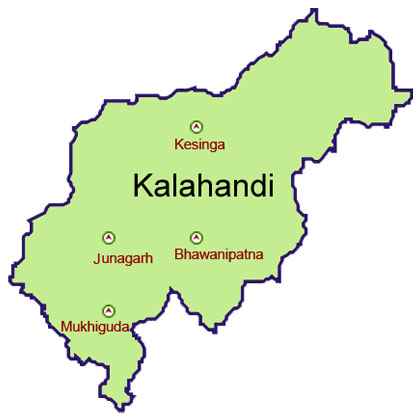
Tourist Places In And Around Kalahandi Kalahandi tourism offers its visitors some exotic locations of interesting history and exquisite natural beauty. Asurgarh is a place where traces of human settlement from 2000 years ago could be found. Gudahandi is a hill that houses some marvelous ancient paintings inside its caves. Rabandarh is a beautiful waterfall whereas Mohangiri is home to an ancient Shiva temple with some scenic natural beauty. The Lal Bahadur Shastri Stadium is also located here where various sports and fairs are organised. How To Reach Kalahandi Kalahandi is well connected with all the major cities of Odisha. It can be easily reached by train and flight as well through Kesinga Railway Station and Bhubaneswar airport respectively.
Best Time To Visit Kalahandi:
The best time to visit Kalahandi is during the monsoon season:
The history of Kalahandi goes back to the primitive period when a well-civilized, urbanized, and cultured people inhabited this land mass around 2000 years ago. The world’s largest Celt of Stone Age and the largest cemetery of the megalithic age have been discovered in Kalahandi.
This land was unconquered by the great Ashoka, who fought the great Kalinga War. In the medieval period, the region had played a prominent role in linking South India, Eastern India, and Central India region and witnessed the battleground for Somavamsi, Chola, Kalachuris, and Eastern Ganga dynasty.
Kalahandi merged with the state of Odisha on the 1st of January 1948. GEOGRAPHY: Kalahandi lies in between 19.3 N and 21.5 N latitudes and 82.20 E and 83.47 E longitudes and occupies the southwestern portion of Odisha, bordered to the north by the Balangir district and Nuapada district, to the south by the Nabarangpur district, Koraput district and Rayagada district, and to the east by the Rayagada district, Kondhamal district and Boudh district. It has an area of 8,364.89 square kilometers. Tel is the main river of Kalahandi. The topography of Kalahandi consists of plain land, hills, and mountains. Kalahandi is surrounded by hills.
THE JOGAMAYA SAKTI PITHA- GURJIMUNDA, KESINGA, KALAHANDI.
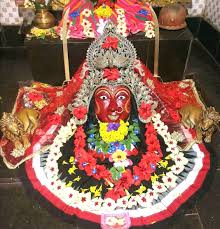
The “Jogamaya Shakti pitha”, which is situated at the feet of the Biripuda mountain, on the riverbank of the river “TEL”, near Gurjimunda village in the district of Kalahandi of Western Odisha.
The place surrounded by hills and Natural beauty has the Architectural temple of goddess Jogamaya and Lord Pataleswar which not only attracts the devotees but also Tourists.
The folk myth says that in the year of 1996, a shiv Linga was discovered in a rock cave at the feet of the mountain. For a period of time it was worshiped by some devotees, later on, Goddess Jogamaya and Lord Hanuman appeared there. As the three Shaktis appeared in one rock cave was a surprise for all in that area. The Tradition of Kalishi along with the spirituality and consciousness of Kalahandi got such a popularity that the flow of devotees from long ways rushed into this place.
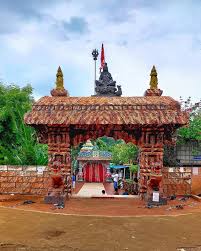
Later, this place was transformed into a Shakti Pitha and became popular. The construction of the temple was started in 2001 with the help of some Reverent Devotees. in the premises of the temple there are certain temples of Lord Ganesh, Pataleswar, Hanuman, Jena Devta, Vairav Devta, Dangar Veer and Goddess Kali, Gram Devi, Ganga Dei etc along with Surya Yantra and Yangyan Mandap, besides all these still the construction work of the temple is going on. Especially in this temple as the Festivals, Abhisheks, Yangyan and Chandi Patha are observed throughout the year besides these mainly the Autumnal Durga puja, Sprinkle Durga puja, Maha Shiv Ratri; Rudra Yangyan and Shamba Dashmi etc also get observed very joyfully.
MANIKESWARI TEMPLE, KALAHANDI, ODISHA, INDIA:
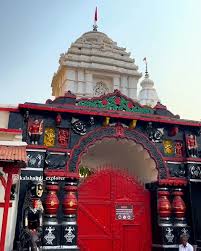
Manikeswari temple in Bhawanipatna is well recognized in Odisha. Manikeswari is also the primary deity associated with the royal family of Paralakhemundi in Gajapati. Manikeswari was brought from Gadapur (Phulbani) around 1200 A.D and it was located in Kalahandi.
Manikeswari was also popularized by Suryabamsi Gajapati in 15th -16th century in Puri region. Purushottam Dev Gajapati considered Manikeswari as consort of Lord Jagannath and made a shrine of Manikeswari at Chilika, now doesn’t exist. Manikeswari is royal family deity of Parlakhemundi. Manikeswari was installed in Bhawanipatna much later around 1849 AD during shifting of the capital from Junagarh.
CHATRA JATRA, MANIKESWARI TEMPLE, KALAHANDI, ODISHA, INDIA:

Observe the Saradiya Puja of the goddess known as Chatra Yatra (Vijaya Utsav) with much pomp and gaity. The name Shakti is used for the supreme goddess herself. Thus shrine of Maa Manikeswari is a major Shakti Pitha. The Khond ritual practice of renewal of post-worship (Nabakalevara) has been also practiced in Manikeswari worship in a modified manner.
Manikeswari has been believed to be “Chhinnamasta” a goddess of Dasamahavidya Group. Kalahandi being the storehouse of ruby stone (Manikya) the name of the deity Manikeswari or Goddess of Ruby is justified. Maa Manikeswari comes out from the Garbhagriha on Mahastami mid-night to Jenakhal, which is 3 kilometers away from the alma mater.
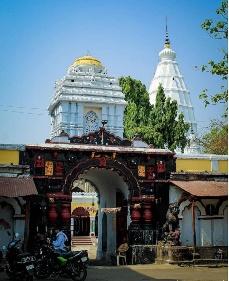
On Maha Navami auspicious morning Chatra Yatra starts with Nagarparibhramana. The effigy of Manikeswari is installed on a bamboo and covered with black spotted cloth. At the top on silver plate Dasamahavidya Yantra is installed as a deity of Tantric Hinduism. On the way devotees of bounteous Mother Goddess Manikeswari, with their folded hands and delighted hearts offer prayers with offerings of flowers, rice, and coconut, etc.
NUAKHAI, KALAHANDI, ODISHA, INDIA:
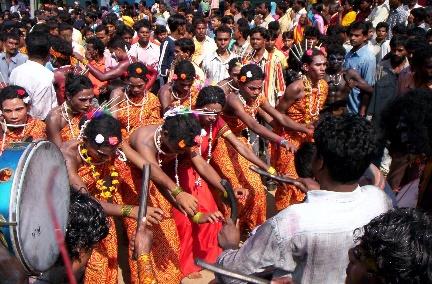
Nuakhai is typically a local festival prevalent in Western Odisha including Kalahandi. It is inspired from harvesting of new crops and historically came from tribal. But now everybody irrespective of caste, creed and religion celebrate it. There are many kinds of Nuakhai according to tribal culture, out of which Dhan (Rice) Nuakhai is most popularly celebrated.
GHUMURA DANCE, KALAHANDI, ODISHA, INDIA:
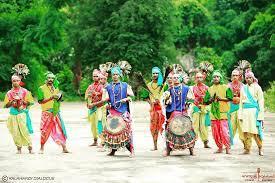
Ghumura Dance is the most sought folk dance in Kalahandi. It is classified as folk dance as the dress code of Ghumura resembles more like a tribal dance, it was a War dance in ancient India and used by Ravana in Ramayana. Ghumura dance is depicted in Sun Temple of Konark confirming this dance form is since the medieval period. Ghumura dance has evolved from a war dance to a dance form for cultural and social activities.
The dance is associated with social entertainment, relaxation, love, devotion and friendly brotherhood among all classes, creeds, and religions in the present days.
PHULARIJHARAN, KALAHANDI, ODISHA, INDIA:
Phularijharan is a perennial waterfall of about 30ft.in height. The multicolor rainbow created by the sun rays falling on the scattered water particles of the fall in an amusing sight to be seen. The evergreen dense forests around the fall provide ample opportunity leisure and recreational tourist.
DOKARICHANCHARA WATERFALL, KALAHANDI, ODISHA, INDIA:
Dokrichanchara waterfall is located 84 km distance from Bhawanipatna near Kokasara village on the border of Kalahandi and Nabarangpur district. The place is nothing but full of natural sceneries. It is a hilly place having a perennial waterfall that creates a pool of crystal-clear water. Dokrichanchara Waterfall is famous due to its two famous waterfalls, Dokaridara and Bhanyaraghumara. Besides the historical Gudahandi cave nearby it makes this place more prominent. The Dokrichanchara falls from a height of 200 feet and is surrounded by beautiful stoned hills. Dokrichanchara Waterfall is a tourist attraction places in Bhawanipatna, Kalahandi.
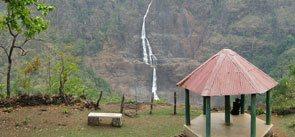
Maa Dokari Devi is also been worshipping this place for a long time. If we walk next to the stream, after 2km distance we can reach the famous Bhanyaraghumara waterfalls, which falls from a height of 150 feet height. The natural stream, dense and thick forest and high mountains attract thousands of visitors. Gudahandi waterfall is located near the Dokrichanchara Waterfall. The scenic beauty of the place is very attractive for waterfalls. JAAKAM: A natural environment with an old wooden Bungalow, a stream of water and also various medicinal plants are to be seen.
KARLAPAT, KALAHANDI, ODISHA, INDIA:
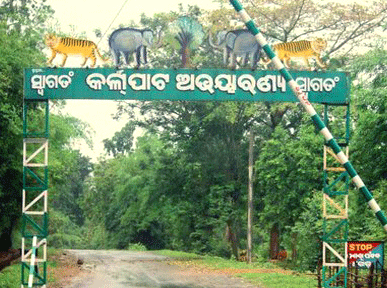
Nearby, there is a Water fall called “Khandual” fall at the foot of a hill the top of which is the abode of a female deity called “Khandua”. The fall was formerly utilized in some indigenous manner of operating a crushing mill. GHUSURIGUDI: Ghusurigudi is a perennial water fall. The evergreen forest around the fall provides ample opportunities to group picnickers.

ASURGARH, KALAHANDI, ODISHA, INDIA:
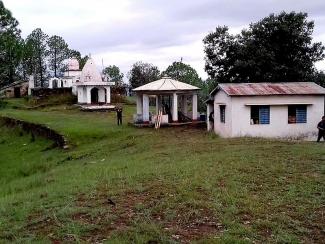
Asurgarh is a small village situated in the Narla Police Station area and is known for the remains of the old fort. Between the tank and the river, Sandul lie the ruins of a fort called Asurgarh. The fort in its original shape was rectangular covering a wide extent of land encircled by a boat.
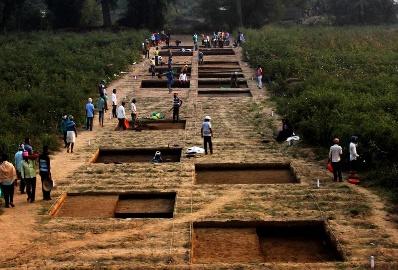
It has four entrances one each on the East, West, South and North where the deities Ganga Devi, Kalapahad, Vaishnavi and Budharaja are respectively worshipped. Inside the fort, there is a small hamlet where Goddess Dokari (Literally means “Old Lady”), the presiding deity of the fort is worshipped. The central part of the fort has a higher elevation with a round on it, which is supposed to be the ruins of a palace. Local people believe that the fort was the seat of a demon king called GOSINHA DAITYA.
AMPANI, KALAHANDI, ODISHA, INDIA:

The charming Ampani hills present a panoramic view of nature. A frolicking valley called “Haladigundi” in this hill range exhibits some peculiar features due to the reflected rays of the sun. The whole area abounds in spotted deer, Sambar and Black Panthers who can be seen at the Behera reservoir.
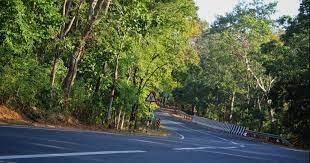
BELKHANDI, KALAHANDI, ODISHA, INDIA:
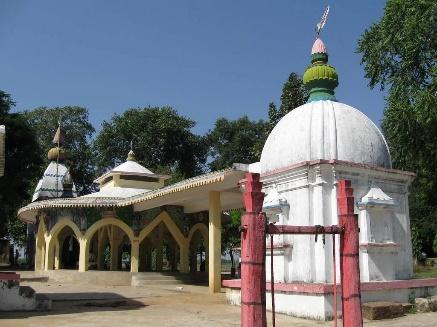
Situated on the confluence of the river Tel and Uttei, two tributaries of the river Mahanadi, Belkhandi has gained prominence as a centre of religious activities and archaeological importance with a picturesque. Among the sculptures unearthed images of Sapta Matruka (Seven Mother Goddesses) and Uma Maheswar are note-worthy. The ruins of Belkhandi are preserved in a small museum adjacent to the temple premises.
GUDAHANDI, KALAHANDI, ODISHA, INDIA:
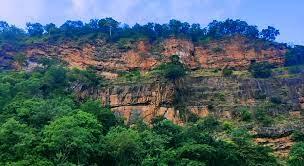
In the Gudahandi hills some ancient caves are there bearing pictographic paintings of remote antiquity. Three small hills, all of curved length, are together known as the Gudahandi hills. Gudahandi in Kalahandi District, Bikramkhol and Ulapgarh in Sambalpur District and Naraj in Cuttack District also possess some writings resembling pictographic paintings, a fact indicative of pre-historic man’s habitation in Odisha.
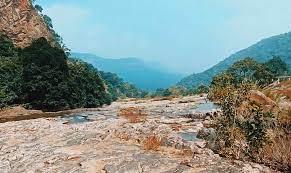
The name Gudahandi, meaning a pot, for molasses, may have its origin in the impression its shape conveys. A rivulet named Behera flows past the village. There are remains of a very old dam across this rivulet; local people call it the work of Bhima, the second of the Pandavas.
JUNAGARH, ODISHA, INDIA:
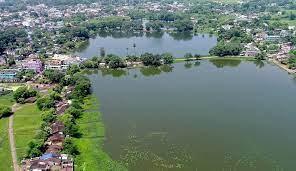
The old Capital of the Ex-State of Kalahandi Junagarh was a well-built fort; the fortified area has a number of temples with Odia inscriptions. This is a place that has sculptural evidence of the “Sati-Rite” which was prevalent in medieval India and was stopped during the British Rule by Lord William Bentick. The sculptures are identified as Sati Pillars which can make an interesting study.
LANJIGARH, JUNAGARH, KALAHANDI,ODISHA, INDIA:
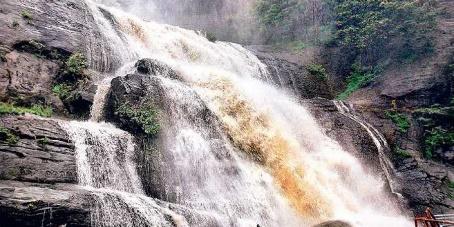
Lanjigarh was the headquarters of Lanjigarh Zamindari under Kalahandi Ex-state. It contains the temples of Gopinath and a female Deity called “Dokari” greatly revered in the area. The local Jhami Yatra or Jhamu Yatra in the month of Chaitra (March – April) is an occasion when thousands of people gathere and witness the walking on burning charcoal by a number of devotees.
INDRAVATI RIVER, KALAHANDI,ODISHA, INDIA:
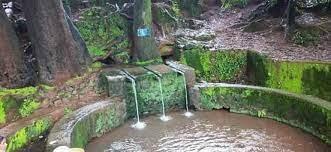
Here from a mango tree’s bottom, making a 3 rows the Indravati river has been outdated which is a beautiful gift of nature. The Indravati River is a stream of the river Godavari. Its starting point, found to be the Ghats of Dandakaranya, range from a hilltop village Mardiguda of Thuamula Rampur Block in the Kalahandi district of the state of Odisha.
KADHEL KARUNDA SRI KSHETRA, KALAHANDI, ODISHA, INDIA:
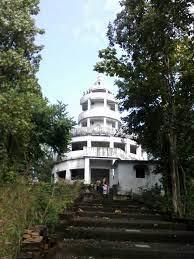
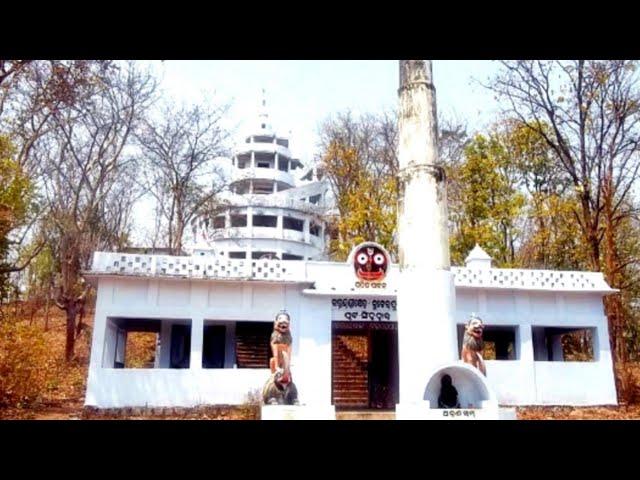
Kadhel Karunda Sri Kshetra of Kalahandi was established on March 28 of 1983. This famous and attractive temple is located near Kadhel village in the bay of Utei Canal which is located to 8 k.m. west of M. Rampur of Kalahandi District. This temple is situated in an attractive place which includes the natural waterfalls of Talijo, the snake design flow of Utei Canal and the musical sound of Wild animals & birds. The former name was Jay Jagannath Ashram but now it is famous as Kadhel Karunda Sri Kshetra of Kalahandi.
SHANKUSGARH: Here, the place called Kurupadar Gram Shankusgarh is set on the confluence of Rahul and Uttei Rivers which is a beautiful scene to see, and also famous Siva temple is located beside.
URLADANOI: Urladanoi is the birthplace of the freedom fighter Rando Majhi, there is a Saheed Stamba in Urladani.
THUAMUL RAMPUR : Thuamul Rampur is known as Kashmir of Kalahandi. Here the worship of Goddess Manikeswari is prevalent and is felt by the people.

Sindher waterfall This is small but beautiful one and having its scenic beauty. Budhidhar waterfall It is situated near Junagarh. Parks and Ecological Gardens ó Bhagirathi Park- Present near Shirdi Sai Mandir on SH-44 is a place of tourist attraction. ó Gandhi Pramod Udyaan- Situated near Statue Square. ó Children Park- Present near Govt. Hospital. ó Ecological Park- One of the oldest parks present on the outskirt of the city on NH-26.
And also so many other tourist interesting places are Kusurla, Sapagonda (Siva and Chandi temple), Deoundi (Astasambhu Siva temple), Mukhiguda (production of electricity), Talgud (Maa Dokaribudi), Behera (Danteswari temple), Dharmagarh (Pardeswar Siva Temple), Churapahad (Siva, Ram, Gayatri temple, Ram Khal and Bhim Khal), Badpur (11 th century Nilakantheswar Siva Temple), Budhipadar (Siva and Jagannath temple) and Deypur (Jagannath temple worshipped by local tribal people).
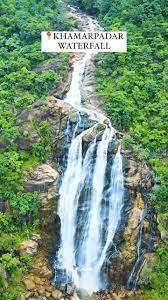
KHAMARPADAR WATERFALL, KLAHANDI, ODISHA
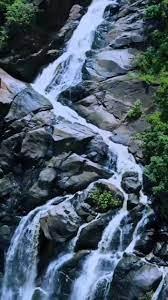
Khamarpadar Waterfall is situated near Benakhamar village under Thuamul Rampur block in Kalahandi district. This recently discovered waterfall is believed to be the highest waterfall of Western Odisha.