A pioneer in the one-stop destination for each & every human being for all tourism needs of the moment. place of tourism serves as a unique digital forum by incessantly providing essential information on tourism and all the tourist places at utmost goodwill service.
Odisha state in eastern India, has a rich and vibrant textile tradition known for its distinctive handwoven fabrics and traditional attire. The famous dresses of Odisha reflect the region’s cultural heritage and artistic craftsmanship

Sambalpuri Handloom Saree:
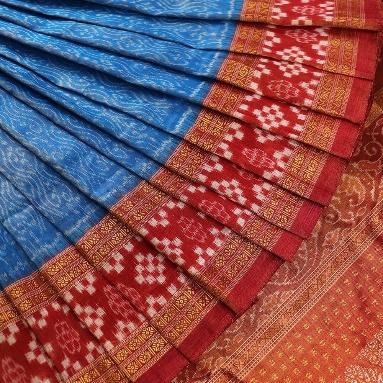
It is produced in the Sambalpur, Balangir, Bargarh, Boudh and Sonepur districts of Odisha, India.The songs, clothing, dances, language, Food and festivals celebrated in Sambalpur and Western Odisha are unique. This distinct cultural identity arises from the strong association of the tribal and folk communities which have been coexisting in Sambalpur and Other Districts of Western Odisha Region for centuries.
Odisha traditional saree:

The Baandha or Bandhkala sarees are the most popular Orissa sarees. Dyed using a unique tie and dye method of Orissa, the colours of these sarees are bright and mostly, red, yellow, black and white. Orissa silk sarees are the products of a distinctive weaving tradition. Whether it’s the Bomkai silk saree that features intricate threadwork on its border and pallu, the famous Sambalpuri silk saree with its tie-and-dye technique or the checkered Pasapali silk saree, Orissa’s weaves bear a unique design signature.
In odisha some of the different types of Sambalpuri Ikat silk sarees and other traditional sarees that are popular among women:
Sonepuri Saree:

These sarees are known for their intricate designs and vibrant colors. These sarees are adorned with intricate motifs, often reflecting the flora and fauna of the region, like the classic Assamese buta or the elegant jaapi design woven with extra weft jala weaving technique.
Bomkai Saree:

Bomkai sarees are popular for their intricate border designs and pallu work. Bomkai sari originated in the village of Bomkai in Ganjam district of Odisha. During the time of Ramai Dev, the then ruler of Patna, it was introduced in Sonepur.
Nabakothi Saree:
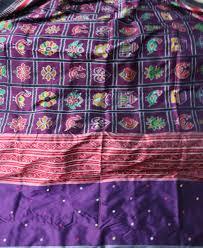
Exploring the Tradition of Nine-boxes Weaves. Nabakothi sarees, are characterized by the depiction of nine houses or `kothi` in a grid way on the body of the saree. These nine houses are represented by nine auspicious motifs such as a pot, bird, lion, lotus, deer, butterfly, peacock, flower, temple and many more.
Berhampuri Saree:
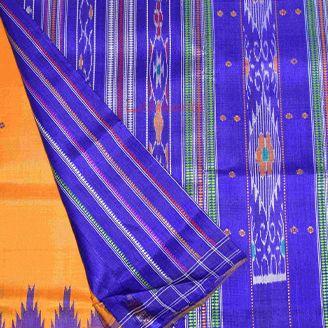
Berhampuri Patta is a handloom fabric from Berhampur, Odisha known for its intricate applique work and often used as a base for the embellished Paithani saree. With time though, consumers’ taste has changed, yet the Berhampuri silks remain a classic.
Kotpad sarees :

Kotpad sarees are a traditional textile from the state of Odisha, India. These sarees are made from natural materials, including cotton and silk, and are dyed using natural dyes. Kotpad sarees are handmade by weavers, who use traditional techniques to create intricate designs and patterns.
Pasapali saree:

Pasapali saree also known as Saktapar is a Bandha (Ikat) handloom sari weaved mainly in the Bargarh district of Odisha, India. The name Pasapali is derived from pasā or gambling games using Chess board.
Maniabandha Handloom Saree.

Authentic Designs that are inspired from natural elements, 100% Hand-woven with Hand-picked materials of superior quality, Handloom products are a result of Handmade Love and sheer dedication.According to a legend, in the 7th Century CE, the Chinese scholar monk Huen T’Sang was offered a saree at Maniabandha, the village that linked the ports of Odisha to its hinterland. The saree was packed in a hollow bamboo pipe. Huen T’Sang was visibly impressed with the wizardry of weaving and spread the word around. Nuapatna and Maniabandha, the two villages and their adjoining areas have a long historical background of weaving typical ikat, tie-dyed cotton and silk fabrics spanning over a few centuries. Both the villages are situated in Athagarh sub division of Cuttack district in the state of Odisha. The Baandha or Bandhkala sarees and sambalpuri Handloom Saree are the most popular sarees of Odisha.
Khandua Saree:

(Also Maniabandi or Kataki) is a traditional “bandha” or ikat sari produced from Odisha worn by women during wedding and a special type of which is worn by Jagannath.
Gamucha :
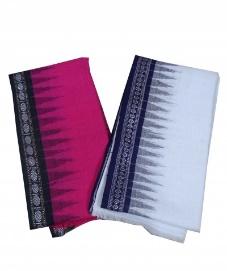
Gamcha is also worn as knee long loin cloths by people of the poorer sections of society, especially menial labourers and farm workers. They are also used as a headscarf, similar to the Middle Eastern keffiyeh in rural areas.
Dhoti and Kurta:

Dhotis holds immense importance in various religious and cultural ceremonies. They are an essential part of weddings, pujas, and festivals. The attire is pure and sacred, making it a fitting choice for such occasions. The kurta pajama is traditional Indian attire, often worn for weddings and festivals.